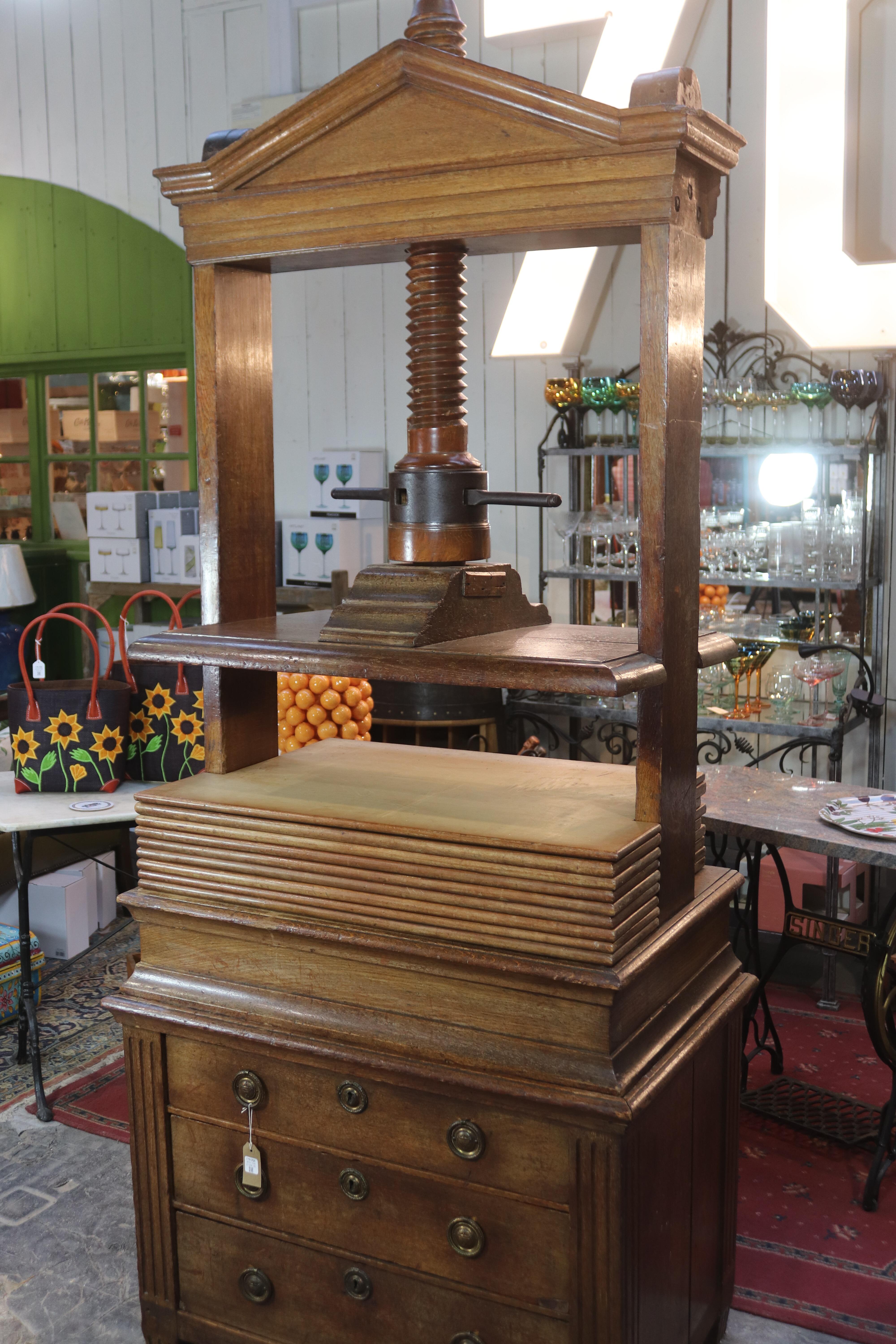
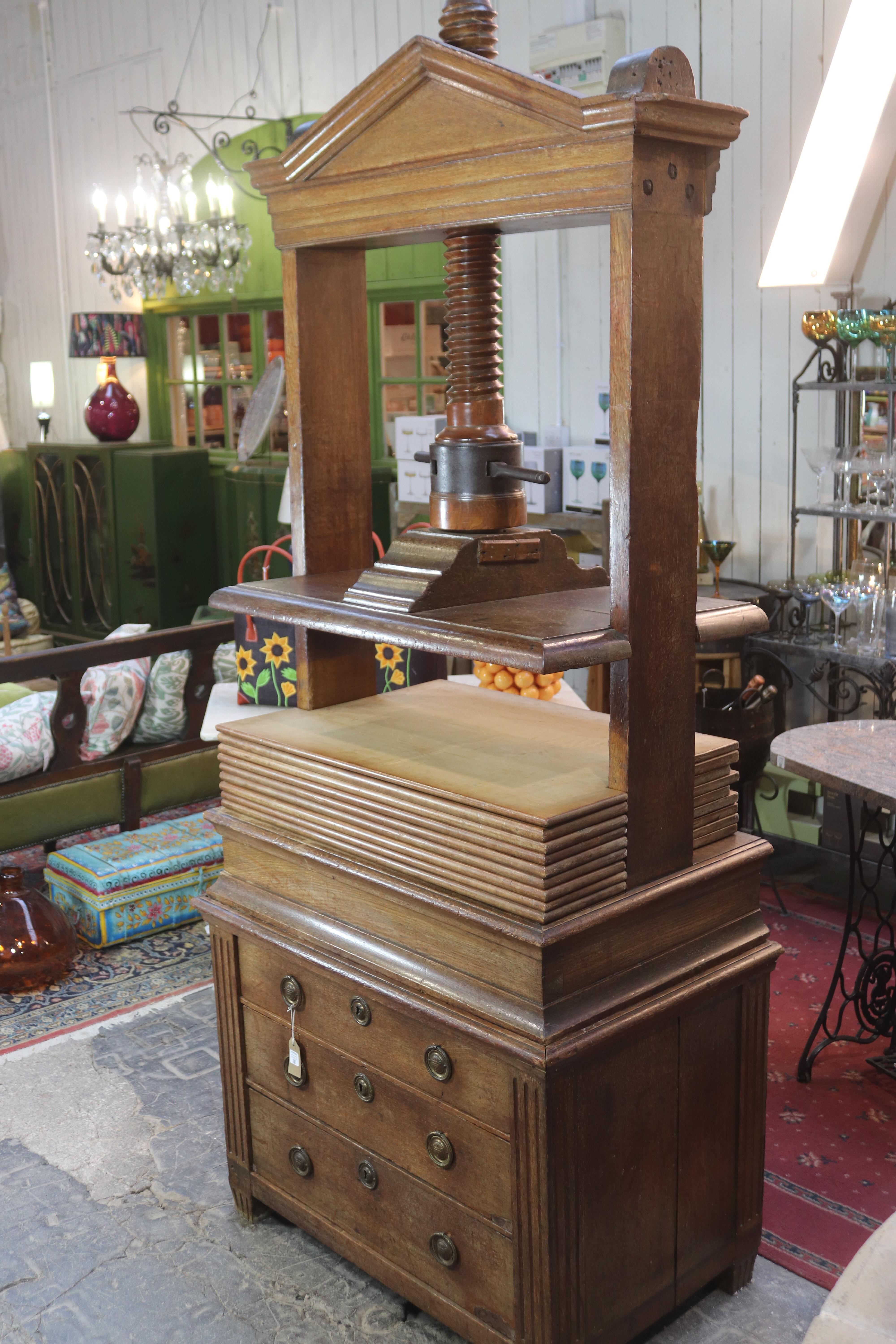
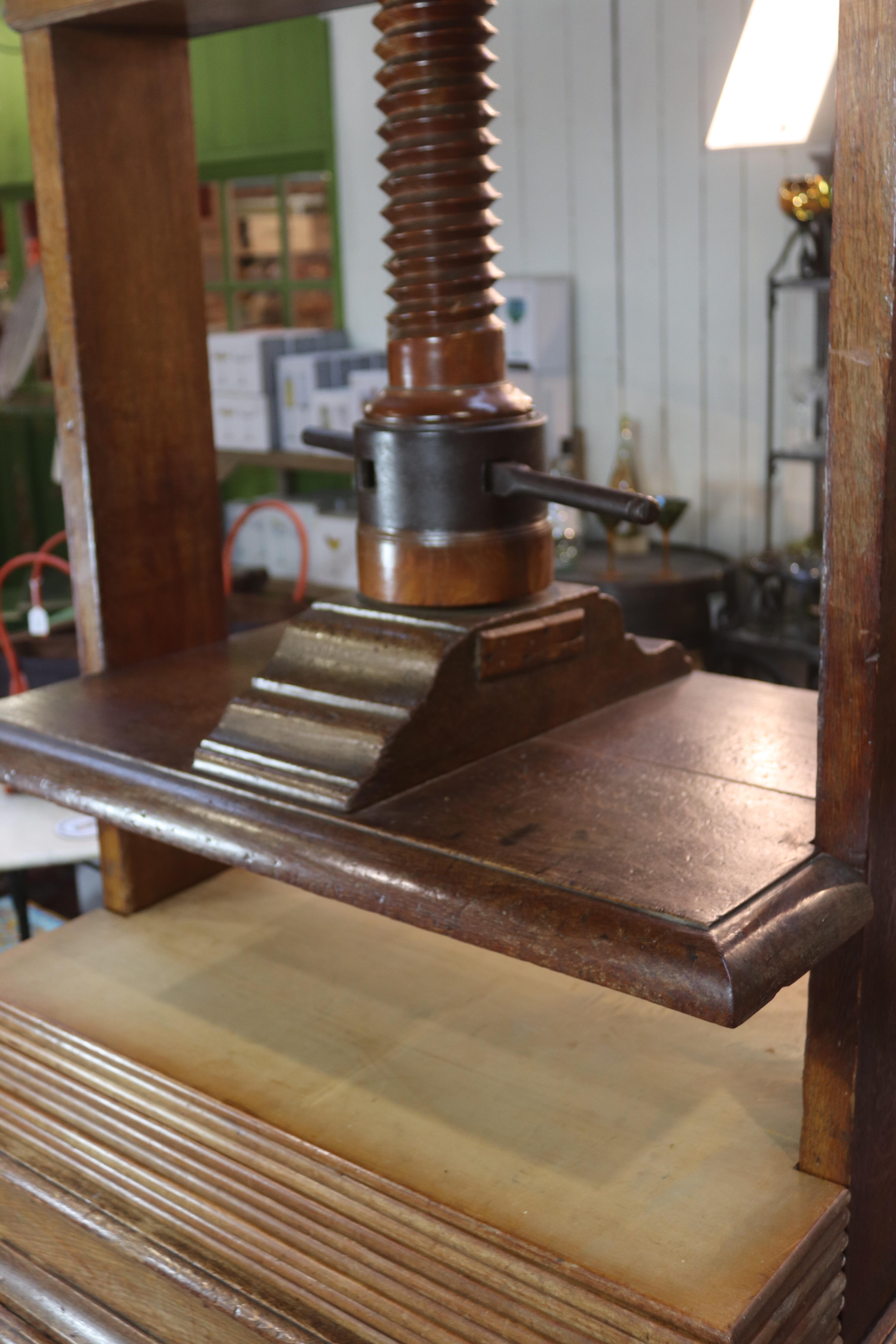
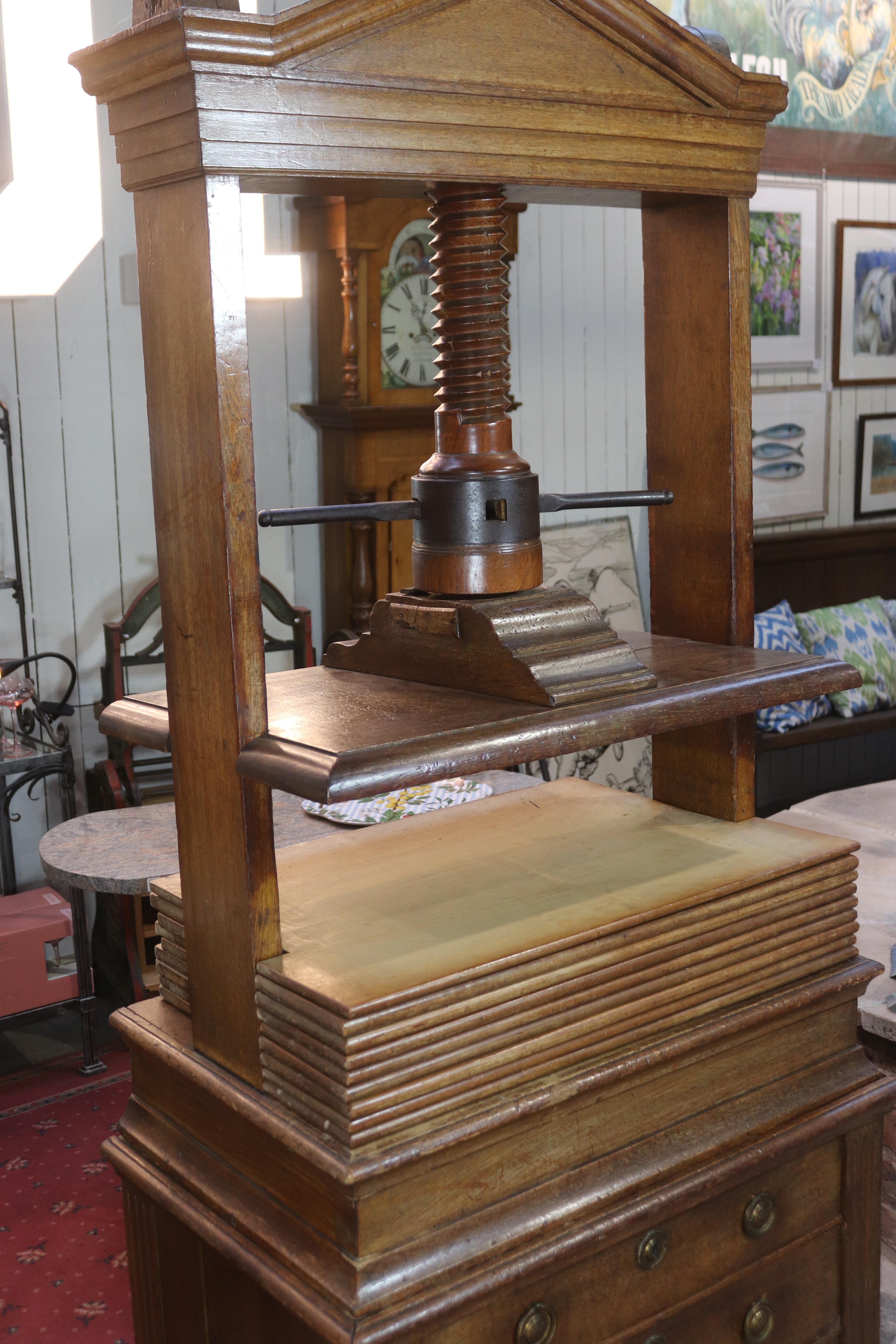
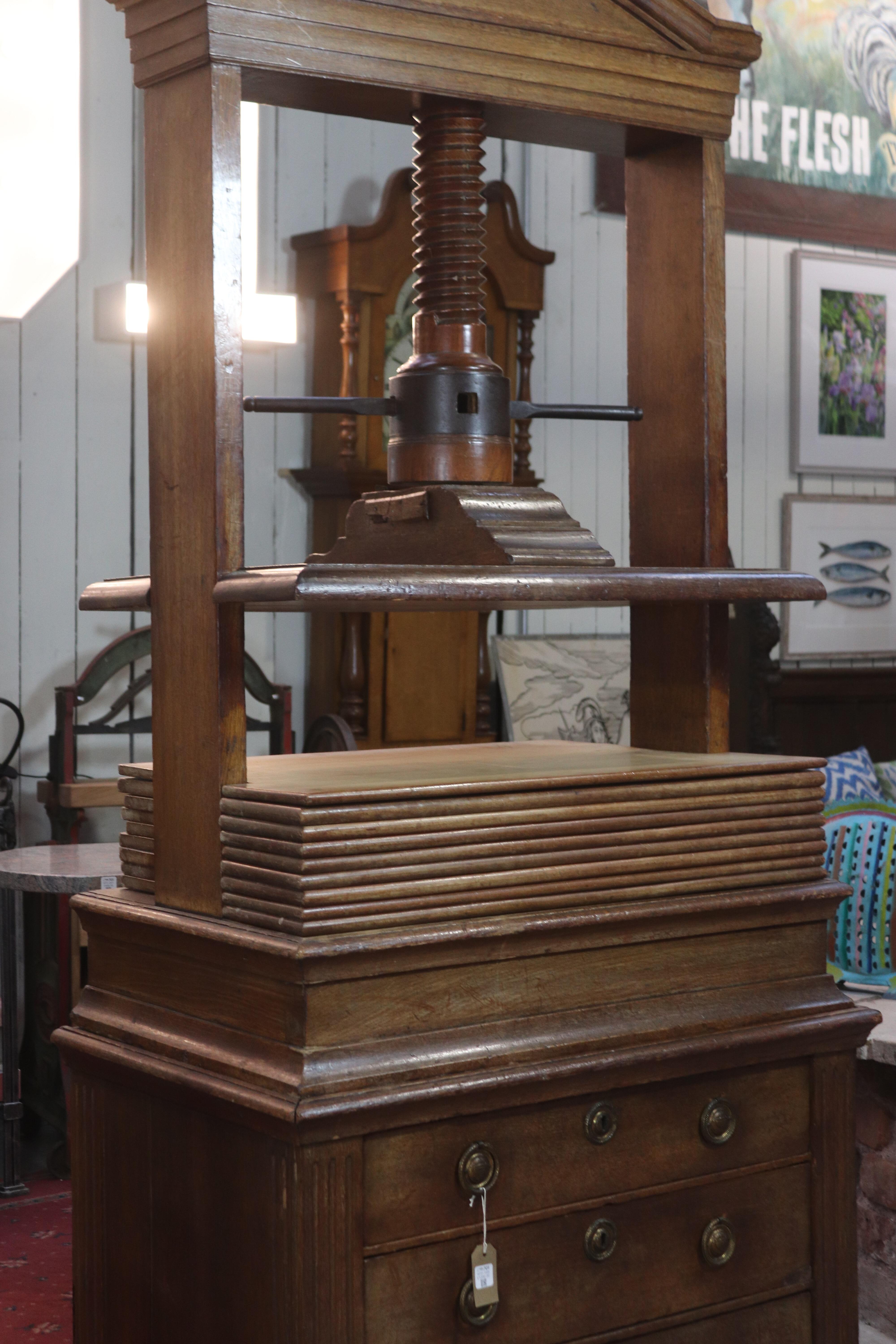
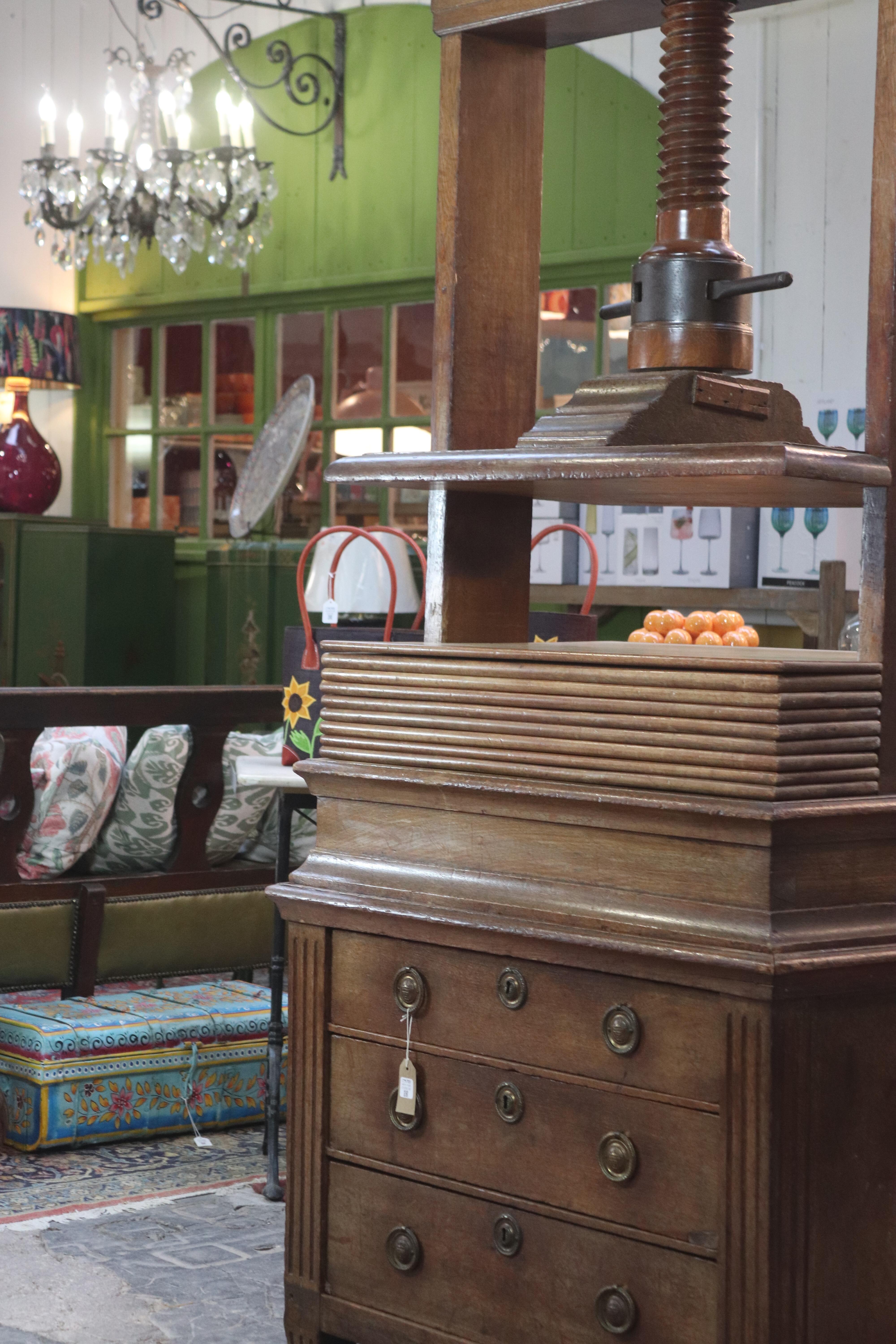
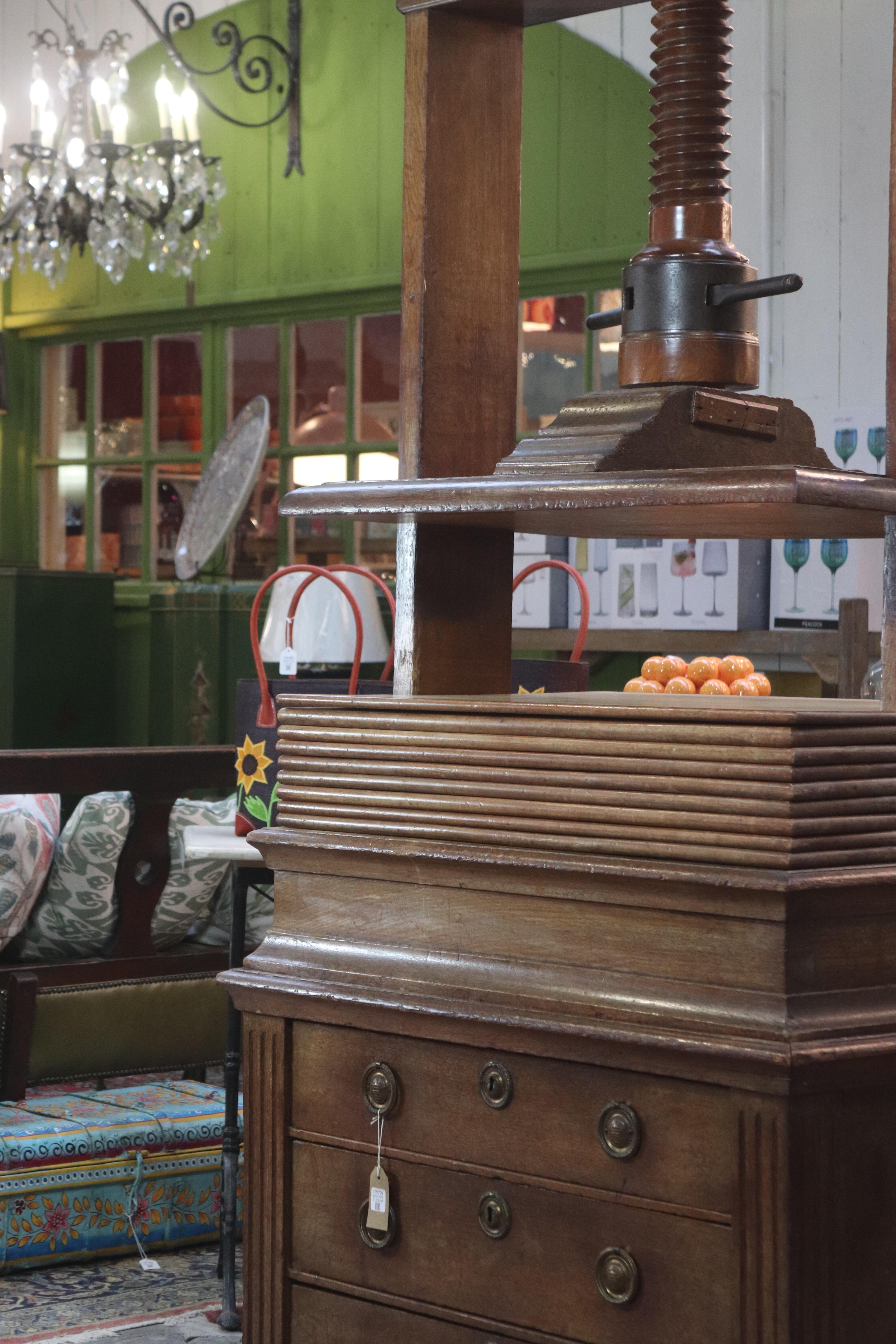
Book presses were used across pre-industrial Europe to apply even pressure on books either to flatten individual pages before binding or to ensure glue set correctly during the binding process. The ink marks on some of the wooden pressing leaves show that this press has been used for this purpose, however due to its size it is likely it was originally built to press linens rather than books.
Nowadays a linen press refers to a large cabinet for storing linens, however, this was originally the secondary function of a 17th-18th century linen press. Essentially a pre-steam version of an iron and ironing board; the impressive oak screw and pressing leaves can flatten ten pieces of Linen at once, imprinting crisply defined folds and giving them a stronger sheen than even modern irons are capable of.
While clean, well-kept clothing has long signified status, the Dutch Golden Age elevated domestic tools like this into status symbols in their own right. Lavishly detailed and prominently displayed, linen presses like this one were both practical and proudly decorative — a statement of taste, wealth, and refinement.
This is small sized fragment PW19 weighing 4 kilos. The sizes shown below can be toggled between cm's and inches.Petrified wood can be displayed both...